
*You can find the previous post in this series here.
Shame is this sense that at your very core, you are fundamentally flawed, worthless, and unworthy of love. Those who struggle with shame use words like these to describe their identity: outcast, unwanted, ugly, bad, unworthy, unloved, invisible, nobody, dirty, used up, worthless, no better than trash, stupid, fool. Wounded sheep carry shameful labels given to them by false shepherds and former church communities such as agents of Satan, angry people, unloving, spiritually immature, mentally ill, emotionally unstable, to name a few.
Wounded sheep also carry the shame of being cast out by their spiritual family. In the aftermath of rejection, feelings of shame are triggered in a variety of contexts unique to each person’s experience. It’s not uncommon for wounded sheep to feel stuck in a cycle of blame and shame until they are able to identify the triggers and their responses to them. The cycle of shame occurs when:
1) a situation triggers,
2) negative feelings about who you are. You then
3) respond to these painful feelings by coping the only way you know how: lashing out in anger, distracting yourself with hard work, avoiding potential triggers, withdrawing from life, self-harm, food/alcohol. Your ‘go-to’ response provides a
4) temporary release from the painful feelings until a new trigger pops up.
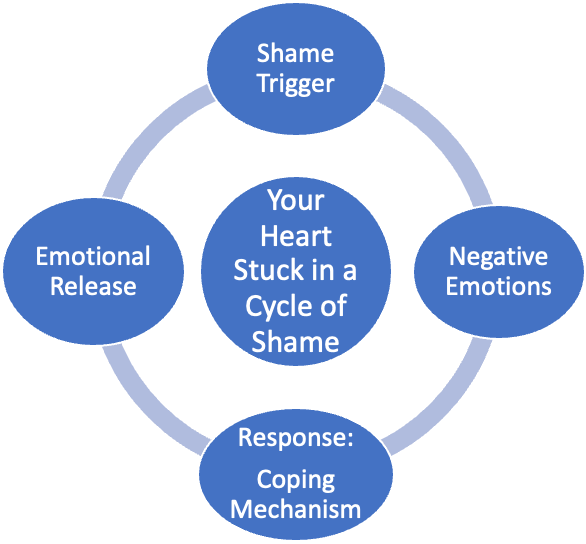

To wounded sheep:
Can you identify this cycle in your own heart and life? What triggers do you experience? In what context(s)? With what people? How do you respond?
How Jesus Breaks the Cycle of Shame
Breaking the cycle requires sitting with your feelings long enough to articulate them to Jesus—trusting that you will not be overwhelmed—rather than turning to unhealthy coping mechanisms[1]. This practice of ‘sitting and speaking’ to Jesus takes hard work and practice because your emotions feel so intense that you fear being swept away and drowned in the flood. Every muscle in your body screams for immediate relief by any means possible. Trusting that Jesus is with you, and you will not be overcome, takes practice and thoughtful planning. I often have clients write out a list of situations that tend to trigger feelings of shame and brainstorm ways to allow the emotions flood over them without turning to unhealthy coping mechanisms. Understanding that the intensity of painful emotions will eventually subside is a helpful first step. The next step is thinking of means of grace to help move through the difficult emotions rather than fight or escape them. Music, gardening, prayer, walks around the block, deep breathing, are all means of grace in triggered moments.
As your emotions ebb, speak your shame to Jesus. Speaking the specifics of your shame to him can feel vulnerable and exposing, but as you press through the discomfort, you grow in faith and trust. As you speak your pain and shame, the next step of growth is actively countering your ‘voice of shame’ with Jesus’ voice. The voice of shame says something like: “You are not enough. You are a fool.” This ‘voice’ reflects the words of others, the cruel labels given you, and the self-deprecating things you say to yourself. In contrast, Jesus says—”You are mine and I love you. Come to me as you are and find your shame covered by my very self.”
As you identify the voice of shame in your life, counter it with truths about who you are in Christ. The goal is to grow in hearing Jesus’ voice more than your voice of shame (John 10:27). You attune your heart to Jesus’ voice in a variety of ways—Scripture verses, biblically rich songs, hymns, poetry and even immersing yourself in the natural world that proclaims the handiwork and character of your Creator. Jesus’ voice says:
·I take great delight in you and rejoice over you with singing (Zephaniah 3:17).
·Nothing can separate you from my love (Romans 8:38-39).
·You are precious, loved, MINE (Isaiah 43:1).
·Though others forsake you, even your parents, I will NEVER forsake you. You are not alone. (Psalm 27:10)
·I will bless you, keep you, be gracious to you, and turn my face towards you. (Numbers 6:24-26).
·I desire to give you good gifts and blessing (Matt. 7:11).
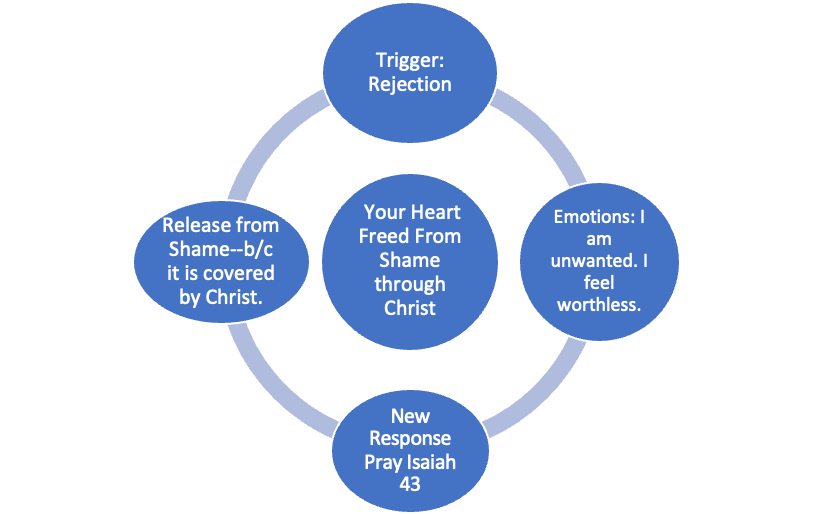

As you go through this cycle over and over again—trading unhealthy responses for dependent prayer and turning to Jesus—the intensity of your emotional responses lessens. Grounded in the truths of who you are in Christ, you grow emotionally resilient. The voice of shame grows smaller and softer as Jesus’ voice grows larger and louder.
Artistic Exercise
To conceptualize how Christ covers your shame, engaging the creative parts of your brain through a concrete drawing can be helpful. On a blank piece of paper, draw two circles. In the middle circle, draw the words and images you associate with the “voice of shame” in your life. In the outer circle, draw words and images that Christ speaks over you, countering the voice of shame. Sometimes I refer to the inner circle of shame as a “force field” or “bubble” that we humans create to keep the scary world out. Wallowing in shame feels safer than risking relationship and being hurt again. Clients often ask, “So how do I pop that protective bubble?” You don’t. Jesus’ tender words and truthful promises poke holes in your bubble. As you grow in reminding yourself of what Jesus says about who you really are and who he really is, your faith grows and the protective bubble slowly deflates and dissipates.

Example: Rebecca Blomker, Shame Cycle
To Helpers:
As you walk alongside wounded sheep, attune to body language that indicates shame: downcast eyes and closed, hunched-over body language hint towards shame. When you hear shame, mirror it back as a question to help the person identify the lies she has internalized about her identity: “Are you saying that you feel unworthy of Christ’s love?” It’s tempting to respond to shame with positive affirmations like “You are so worthy of love! So talented, etc.” If at her core a person believes she is unlovable, these types of positive affirmation do not penetrate the heart. It’s important to point out the good you see while ultimately pointing the person to Jesus and how he views her. Jesus’ voice carries the power to cover shame, and as a helper you play a role in guiding wounded sheep to grow in listening to his voice.
*You can read other posts in this series here.
[1] Coping mechanisms are self-reliant means of maintaining safety and covering your shame. These coping mechanisms are ways you survived abuse and trauma in the past. In the long term, these ways of coping can be destructive and inhibit life and flourishing. Learning new, healthy ways to move through difficult emotions is essential to thriving.




 Pursued