
*You can read the previous post in this series here.
Exhausted and increasingly cynical, we chose not to go back to church for a few months. We listened to online sermons and pulled out some of our counseling materials to teach our kids about the nature of the human heart, the reality of suffering, and the hope we have in Jesus. Slowly, our bodies and hearts relaxed, and we felt the Lord pressing us back to church.
While out of town for a sporting event, we spent the night in Louisville, KY, at Southern Seminary (being an alumni has some perks, like cheap on-campus hotel rates). While browsing the campus bookstore, Jon ran into a young Boyce College student planning to move to our area. The student asked where we went to church, to which Jon replied with “Nowhere. It’s been hard to find a good one.” The student said a professor of his recommended a Bible Church in our area, one that had strong ties back to John MacArthur and the Master’s Seminary. Our personal experience with individuals tied to MacArthur-affiliated Bible churches hadn’t been good. The adoration of MacArthur bordered on hero-worship and the Bible church culture seemed to have a strong “us” vs. “them” approach to interacting with secular culture. But with no other options on the horizon, Jon called up the pastor of this church and asked to meet with him, hoping to get a feel for his character and vision. The pastor presented himself as pro-counseling and soul care; after all, he’d started a small group ministry with Paul Tripp’s counseling book Instruments in the Redeemer’s Hands. Jon shared some of our bad church experiences, testing the pastor to see his response. This pastor affirmed he’d experienced the pastors of those churches as condescending in other contexts. The pastor’s affirmation caught Jon off guard, and feeling raw and desperate for church fellowship, he lowered his defenses. We chose to attend the church.
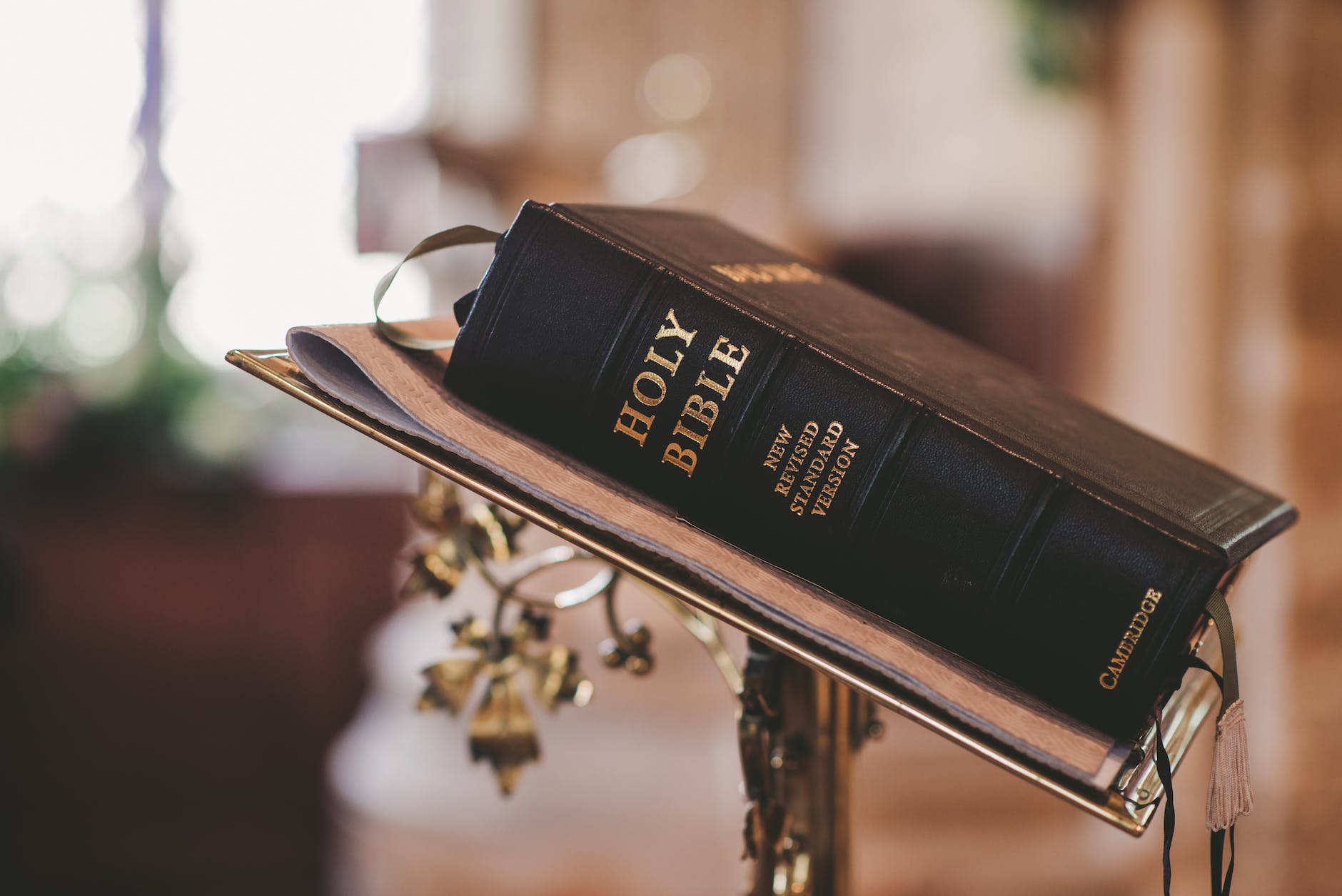
From the beginning of our time there, the pastoral leadership asserted from the pulpit, Sunday School Classroom, and conversations in the foyer, “Doctrine is life!” Doctrine, not Jesus, is life. Early on, Jon picked up on the danger of this faulty over-emphasis, pointing out: “You know who else knows doctrine really well? Satan!” The church’s doctrine included a heavy emphasis on gender roles and the authority of the elders and men in general. Jon attempted to start a Saturday morning football fellowship for the men of the church. Before he was allowed to do so, the administrative pastor called him up to secure his promise that he “wasn’t going to do any teaching, praying, or reading the Bible” at this football fellowship. Apparently, any congregant not officially deemed a leader by the elders, had no right to “teach or pray with” anyone in the church. Jon was like “I just want to develop relationships and play some football!” We’d never experienced such paranoia around casual church get-togethers or the sharing of theology and biblical insight. As Jon played football with a small group of guys from the church, I slowly began developing relationships with other moms through playdates. I was puzzled to discover the controlled, narrow lives of the women. Every move they made had to be sanctioned by their husbands. If they were allowed time outside the home, it was often for physical exercise to look good for their husbands. One leader’s wife told me her husband shamed her for being fat and told her that if she didn’t get her act together, he could lose his leadership position. Never mind that this leader demanded that she manage their large household, take care of their side business, and manage their kids’ activities without any help from him since “managing the household is your God-given role.”
I learned quickly that as a woman, I was deemed the “weaker” that is, “less intelligent and more prone to being deceived” of the sexes. Women were relegated to childcare and their worth directly tied to their husband’s position within the church. Elder and deacons’ wives were treated as more superior than the rest of us merely because of their husband’s position and doctrinal training. Women who served the elders and pastors were publicly elevated as “Godly.” One woman spent hours of her time and money cooking elaborate meals for the weekly elders’ meetings, leaving her own husband (not an elder) and children at home as she served the leadership. When the leadership praised her “sacrificial service” from the pulpit, she glowed, and I thought “There is something sick and wrong about all this!” It was as though the woman worshipped the leaders and deferred to them more than her own husband. In various contexts, we saw correct doctrine elevated above character and love for Jesus. Adherence to correct doctrine and the pursuit of formal doctrinal training (seminary or otherwise) was the ticket to securing leadership roles in the church. Men with leadership roles were elevated as superior beings within the church, so women pushed their husbands to pursue leadership (even if they didn’t want to!) to have some measure of authority and social standing within the church. In practice, “Doctrine is life!” translated to “Knowing doctrine makes you superior and gives you the right to lord your authority over others.”
At the time I was pursuing my counseling degree and growing my skills through meeting with women one-on-one and in small groups. I was told by the pastor’s wife that I couldn’t host groups in my home without the elders’ permission. So, I asked, and was granted permission to host a small soul care group. During that season of working with women, I discovered emotional and spiritual oppression happening in more than one marriage. I intuitively withheld my assessments and simply gave the women a safe space to share their hearts and perspectives, but my concern regarding how theology, particularly around authority and gender, was being utilized in the wider church context to silence the voices of women, only increased over time. At one point Jon and I invited the pastor and his wife over for lunch, and I asked him, “How can I use my counseling gifts in the church?” His response: “Rebecca, in my experience the only thing women do when they get together is gossip.” End of conversation. In other words, women, because they are so sinful, have nothing to offer the church in terms of insight or wisdom. I remember thinking, “No wonder this church is suffocating and relationally constipated! Women are not free to exercise their gifts!”
Meanwhile, my husband, after years of experiencing emotional abuse in his family of origin and in the church, developed a severe auto immune disease in his gut. His gastrointestinal system on fire, we ended up in the emergency room multiple times, and doctor after doctor couldn’t figure out the root cause. Already slender, he lost twenty-five pounds and struggled just to get through the day. Eating anything processed set his body into flight-or-flight mode, so he adjusted his diet (beet smoothies anyone?), bought out half of Natural Grocers, saw a naturopathic doctor, and still no relief. Desperate for help and hope, he asked to meet with the pastor for counseling. Jon expressed through tears that he was struggling to see the beauty of Jesus in his suffering. The pastor’s response? “Jon, you went to seminary, what’s wrong with you? Doctrine is life, remember!?” Jon came home from that meeting feeling shamed for his struggle and saying, “The pastor basically told me that correct doctrine is my savior and any suffering I’m experiencing shouldn’t be happening because I have a seminary degree.”
In spite of the suffocating oppression we experienced within our short two years at that church, God provided our family with glimmers of grace. One of those glimmers came the day we chose to become members. That Sunday morning, our third boy, then about four years old, came up from his class in the basement wearing a pair of large paper angel wings taped to his back. With every boyish move, those wings fluttered, glittered, and caught the eye of anyone nearby. During the service, prospective members were called to walk up the long, carpeted aisle of the old-school church building with lofty wood beams, blood-red carpet, and stairs leading up to an elevated platform at the front. Our blond-headed, angel-winged boy, Isaiah, led the way up front, his chubby legs chugging along until he hit the first step heading up to the platform. He didn’t see it, tripped, and went sailing across the landing, his glittery angel-wings flouncing as his legs flew spread-eagle through the air. Our next boy, Josiah, paused, pointed at our flying angel, and busted a gut. Within seconds our whole family was laughing hysterically as our flying angel landed on his stomach with a thump, then popped up and trudged up the platform to face the congregation. As the pastor began his little New Member’s speech, we continued to silent-belly-laugh until tears ran down our cheeks. That memory still provides our family with laughter and delight in both the beauty of our humanity and God’s sense of humor. In time we learned that such moments of beauty were lost in that congregation since the mantra “Doctrine is Life” choked out the ability to see or appreciate how children and women offer insight into the playful, nurturing characteristics of God.

Eventually, we came to understand that I would never be allowed to freely utilize my counseling gifts within that church context, and Jon, in a season of deep personal suffering, felt the leaders elevate themselves over him with “right doctrine!” He couldn’t in good conscience support leadership who crushed suffering souls rather than empathize and offer hope.
Having been through our fair share of bad church experiences at this point, we came up with a short explanation as to why we were leaving the church that read something like: “We realize our philosophy of counseling is best expressed elsewhere, so for the sake of the unity of the body, we think it wise for us to find another church. We are thankful for our time here and pray the Lord continues to bless your ministry.” We copied and pasted the same message to all our friends and anyone who asked why we were leaving. Our goal was to leave in a manner that brought clarity, not confusion, to those who stayed behind. We also suspected that given the heavy-handed emphasis on doctrine and authority that any hint of questioning on our part towards the leadership would not be received well and could potentially lead to our being disciplined. The tough part was that merely leaving the church was an intrinsic assessment. As soon as the pastor learned of our intention to rescind our membership, he called Jon and asked for a face-to-face exit meeting saying, “I will be nice. I just want to give you and Rebecca the opportunity to share your hearts with me, and I want to learn from you.” Jon and I went round and round discussing the wisdom of accepting his offer because the pastor’s seemingly “nice” invitation didn’t fit our experience of him over the prior two years. Also, friends of ours were leaving the church too, but the pastor hadn’t asked them for an “exit interview.” The discrepancy made us nervous. The main difference between us and our friends was that Jon and I had formal seminary training and we’d deeply invested in relationships. We instinctively knew that in a church kingdom where “Doctrine is Life,” individuals with seminary degrees posed more of a threat when leaving the church than those who did not. Our affirmation, or lack thereof, carried more perceived weight. So, we told him “No.” But he persisted with calls and emails declaring his good intentions, so we finally chose to give the pastor the benefit of the doubt and said “yes” to his request for an “exit interview.”

We met the pastor at a public coffee shop, one owned and operated by believers and frequented by many Christians across our city. It felt safer, more neutral than the church. Or so we thought. The moment we walked into the coffee shop the pastor bristled. Every muscle in his body taut with rage, I attempted to diffuse the tension with an awkward side-hug, something I’d never dared do in our time at the church. We sat down together at a table in the open seating area and without any attempt at niceties or a formal lead in, the pastor laid into my husband, calling him a baby and weakling for crying during the time he sought counseling. The pastor pointed at an empty table across the room, jabbed his finger in Jon’s face and said with a snarky sneer, “You sat there and wept like a baby! Like a baby!” Tears began trickling down my face as I thought of all the women I’d loved and ministered to at that church. I’d suspected they weren’t safe. Now I knew for sure. For the entire meeting, tears streamed silently down my cheeks. During his diatribe, the pastor looked at Jon and said, “I met with you, and I know you.”

At that arrogant presumption, I interrupted with a flat out, “You don’t know him at all,” and defended my husband’s heart and character. I have no memory of what I said, only that I felt compelled to correct a pastor who’d only met with my husband a handful of times, given him zero empathy or kindness, yet dared place himself in the God-like position of declaring he knew my husband and had the power to condemn him with that knowledge. The pastor went on to say that before meeting with us he called up our church friends, everyone who knew us, and drilled them for information to discredit our character and theology. He found nothing he could use against us. He threw out an incredulous, “People actually like you. You’ve had so many people into your home, showed such wonderful hospitality, served in the nursery, contributed in small groups and served on work days.” It was as if he couldn’t conceive of anyone with good character and theology leaving his church. He thought there must be something wrong and sinful in us that would propel us away from him. He never once considered that perhaps there might be something wrong in himself. I have no idea why he divulged that he’d tried to dig up dirt on us and found only good things. Perhaps it was a Balaam’s donkey kind of moment—truth from a man behaving like an ass.
I don’t know how we made it through that meeting without crumbling other than God’s grace sustained us through the most emotionally and spiritually abusive tirade I’ve experienced from a man who claims the office of shepherd. The pastor followed his confession of trying to find dirt on us with this chilling comment: “My church is an island, and if you aren’t swimming toward it as hard and fast as you can, I don’t want you.” My church? My island? The kingdom language of those statements popped out in full color. If we weren’t sailing full bore towards his church kingdom, he had no use for us. The pastor kept bullying Jon with a litany of accusations without any evidence for over an hour. Jon responded calmly and managed to sidestep multiple comments seeking to bait us into a doctrinal argument so he could discredit us on our way out. When that didn’t work, the pastor went so far as to claim that David Powlison (one of our counseling professors) would disagree with our decision to leave his church. That is, without even speaking to Dr. Powlison (apparently this pastor had lunch with him, once, after a conference), he knew for sure Powlison would disagree with our choice to leave. This weak attempt at a power-play left us speechless. After enduring almost two hours of the pastor’s verbal dress-down, and with no indication he had any intention of letting up until he’d cowed us beneath him, I stood up saying, “We have to get home to our kids and babysitter.” Jon and I walked the coffee shop door never to see him again. The elder board followed up with a letter “allowing” us to rescind our membership and hoping we were “still walking with the Lord.”
Our family didn’t go back to church for a long time. Months. For a couple months we didn’t even listen to sermons online. Sunday was like every other day of the week, except that we slept in a little longer. After three months or so, I became restless and concerned that this period of church-less-ness was dangerously long. Yet every time I suggested looking online for another place to worship, Jon balked because he’d be overcome with panic, have trouble breathing, and start trembling. Jon’s response illustrates how the memory of having your character and loyalty to Christ brutally attacked by a false shepherd remains in your body. The physiological effects of spiritual abuse mimic those of a victim of emotional and mental abuse since those forms of abuse are intertwined. Numerous studies have reinforced that the damage of emotional and mental abuse is far more pervasive and long-lasting than physical abuse.[1] Perhaps the reason for this is that emotional and mental abuse attacks the core of your personhood and identity. For a Christian, spiritual abuse cuts to the heart of who we are as human beings made in the image of God and designed to find our value in connection to him.
As Mike Emlet, MD, and counseling professor at CCEF[2] teaches, we are “embodied souls.” Our hearts affect our bodies, and our bodies, our hearts. Therefore, our body’s response to church trauma and abuse is real and often overwhelming. Many of my clients, just like my husband, tell stories of not being able to walk into a church sanctuary without dissolving into tears. Just entering a church after experiencing oppression at the hands of false shepherds feels threatening. Words like “grace” and “submission” spoken from the pulpit might trigger bad mental and emotional associations. In those moments, with fear and adrenaline coursing through the body, many wounded sheep run and hide in a bathroom stall or head out the back door for the parking lot. Learning to slow down and care for our bodies in the aftermath of spiritual and emotional abuse takes practice. Meditation, deep breathing, and various relaxation exercises help calm triggered bodies, so we can begin the hard work of healing our hearts.
Slowly, Jon began working through his experience of spiritual abuse by caring for his body and seeking Jesus as his only true refuge. Trusting that Jesus would rescue him and our family from the mouths of false shepherds and feed us rest and hope, didn’t happen quickly. When church after church after church experience ended in oppression and cruelty, it felt risky to trust we’d survive another like it. It felt far safer to hunker down and never go back. We wondered the point of our repeat experiences with shepherds who chewed up the sheep and spit them out. During that season of battling cynicism and searching for safety, Jon often joked, “God does good to everyone but me!” He knew that wasn’t true, but after so many years of bad it was hard to believe that Jesus would strengthen us, bind our wounds, and once again bring us to good grazing land—a healthy church—and rich spiritual pastures. Jon’s boss at his secular job at the time was one means of grace as he battled cynicism. Though not a believer, this man listened, cared, and allowed Jon to be human. Though Jon’s boss didn’t acknowledge God, his image-of-God humanity testified to Jesus’ presence and care. Jon’s heart battle in the aftermath of church abuse lay in letting go of relying on his own judgment and relying on Christ’s wisdom as superior to his own. Proverbs 3:5-6 took on a new and richer complexity: “Trust in the Lord with all your heart and lean not on your own understanding, in all your ways acknowledge him, and he will make straight your path.” Jon, a fiercely self-reliant human with a gifted intellect and ability to discern more than most, learned through this experience of being broken and battered by a false shepherd that his only hope was in relying on his True Shepherd, Jesus—who laid down his life for the sheep.
Reflection
- In your church experience, how did doctrine (theology) become a tool of power and control? Can you point to specific conversations or situations where doctrine was used to silence or control you?
- How have you personally responded to those twisted theologies? Have you begun the process of deconstructing what was false?
- How can you be careful to reconstruct your doctrine around Christ and his word? It’s tempting to rebuild your doctrine around simply not believing whatever your oppressive leaders believed. Why might that be problematic?
- How can you invite healthy, Christ-centered accountability into your deconstruction and reconstruction process?
You can read other posts in this series here.
[1] Hart SN, Brassard MR, Karlson HC. Psychological maltreatment. In: Briere JN, Berliner LA, Bulkley J, Jenny CA, Reid TA, editors. The APSAC handbook on child maltreatment. Thousand Oaks, CA: Sage; 1996. pp. 72–89. [Google Scholar]
[2] Christian Counseling Education Foundation located in Glenside, Pennsylvania.




 Pursued