
*You can read the previous post here.
For our family, after years of one difficult church experience after another, the lockdown during Covid was a blessed reprieve from institutional church. We walked through Acts with our kids, listened to Tim Keller sermons, and began researching the possibility of house church. Covid lockdowns triggered an explosion of house churches on our local landscape, and we thought exploring a simpler approach to church might be a wise move away from the corrupt power and control dynamics we’d seen in so many institutional churches. We were interested in learning from leaders in the movement and then potentially hosting a church in our own home and inviting friends and neighbors.
While searching online, we stumbled across a loosely organized house church network in a low-income area about a half hour from where we lived. The first Sunday we attended, we sat outside on the back patio of the facilitator’s home, sang old hymns, shared prayer requests, and discussed a passage of Scripture. Our kids were invited to contribute their thoughts and questions, and the other adults expressed an interest in their lives and struggles. The simplicity and intimacy of this setting refreshed our weary souls. To this day our kids say House Church was their favorite because they felt their voices were valued and their hearts cared for by other adult believers. They also enjoyed being able to know the adults beside them more personally. Our kids weren’t treated as merely teaching projects but as equal members of the body who could contribute through sharing what they were learning about God and themselves.

During our time in house church one of the women—Sarah, a single mom living at the poverty level—struggled to parent two adult children through severe mental health issues. Sarah’s oldest, a son, struggled with hallucinations, paranoia, and suicidal ideation, and though she’d sought help from various mental health professionals, her son’s struggles only escalated. Overcome by fear and the belief he could trust no one, Sarah’s son fled the safety of home for the streets and lived delusional and angry at God for allowing his suffering. Sarah intuitively sensed that her son teetered on the brink of despair, so she reached out for prayer and support. The cry of her mother’s heart was “Jesus! Save my son!” A handful of us committed to daily sending Scripture and snatches of songs to orient our weary hearts around God’s goodness. We had no idea Jesus was laying a foundation of hope to prepare us all for a violent, searing sorrow. When Sarah’s son took his life she called me—sobbing and screaming, sobbing and screaming—her heart shattered into a thousand aching splinters. The shock of her sudden loss knocked the wind out of me and broke my heart. I ached for her sorrow-on-sorrow. This is not the way life was meant to be!
The first Sunday after her son passed away, our little church simply sat together under a crushing blanket of sorrow, longing for the new heaven and new earth, longing for Jesus to wipe away our tears. We listened as Sarah wept and shared memories of her son’s love for hot peppers, his gentle nature, and the beauty of his guitar-playing. The throbbing ache of missing him pierced her heart and threatened to bleed her hopeless. Yet in the days leading up to and after the funeral, Sarah reminded us that God cares and can be trusted no matter the circumstance. Her clinging to Jesus through the deepest sorrow a parent could experience gave testimony to the genuineness of her faith. Our family grew more tender and trusting through seeing Jesus’ power, love, and soundness of mind shine through Sarah’s pain. She reminded us that when life’s trials feel too much to bear, God is with us, and he is still good. She shared that in her layered grief, “Jesus revealed enough of himself for me to keep following him and be well with my soul.” As we walked with her through the Valley of the Shadow of Death and into the wilderness of processing grief and loss, we saw Jesus carry her through.
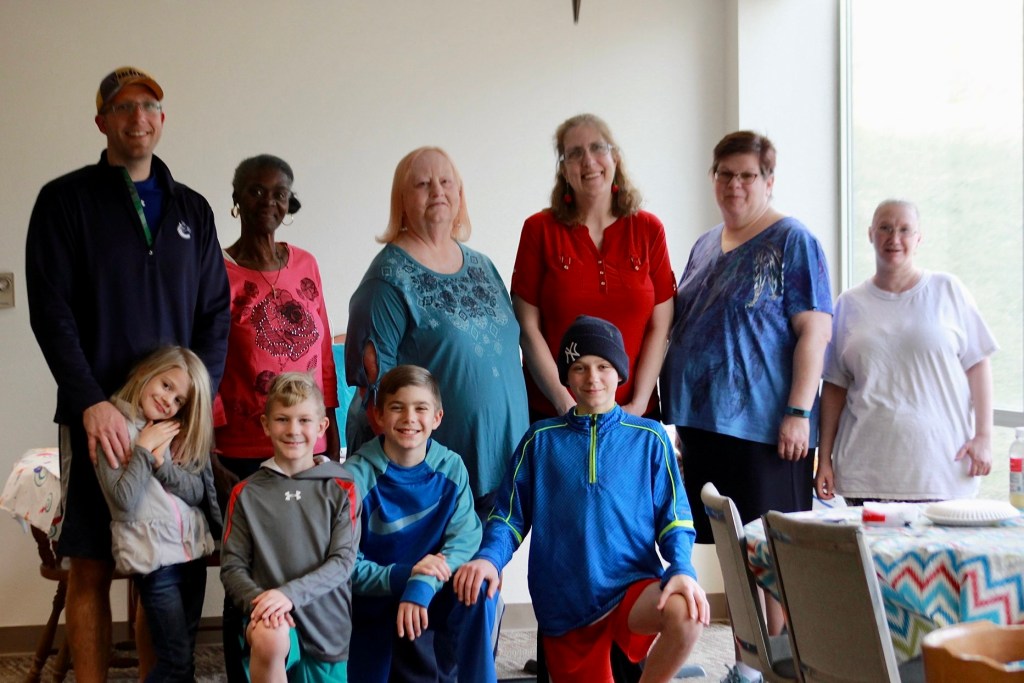
During this season of walking through grief, Jon and I transitioned from attending house church to hosting one in our home. We gathered a handful of fellow saints working through church-related traumas and hosted a pilot group to see if leading a house church might be the direction God had for us. We focused our time around reminding ourselves of our identity in Christ and lamenting our losses together. This season was perhaps the sweetest of all as we lamented our losses, big and small, and found hope knowing Jesus was using our grief to draw us closer together and deeper into him. As a group we wrote out individual laments and then shared, listened, and asked each other thoughtful questions. We bore witness to each other’s pain and Christ’s redemption. Our eight-year-old daughter, Esther, shared her lament last of all, and the child-like simplicity of her lament captures the heart of them all:
“Dear God, I do not like that my mom got rid of my favorite shirt. I loved that shirt so much and I knew that I was never going to see it again, and I get sad of things when they are in the trash. I want your help so that I can learn to get rid of things without being sad, and I need to know not to hold onto things so tightly, even if I love that thing so much.”
Learning not to “hold onto things so tightly” is a lifelong process. As a family, we’ve been on a fifteen-year journey of learning not to hold so tightly to family or church, as if they can somehow satisfy our hearts and make us “ok.” They can’t. Family and church are gifts, but they cannot ultimately satisfy. Others in our group were learning to not hold so tightly to marriages, sons, intellect, athletic accomplishments, and other created gifts that cannot ultimately fill our thirsty souls. Jesus is the only one that can fully satisfy and give us the safe home our hearts long for. As a group of saints, sufferers, and sinners, we wept, prayed, laughed, and grew together, spurring one another on to believe this truth:
I am with you and will keep you wherever you go and will bring you back to me. Even when you wander far in doubt, question my goodness, and hope in other things, I will not leave you until I have done what I have promised you—I will restore you and bring you back to me, and give you Hope. (Gen. 28:15, my paraphrase).
After a year of hosting church, Jon and I realized that though we treasured the intimacy of that context, we were leading our time together like group counseling, which in the long term would be an imbalanced approach to church. Though our time in house church was necessary to our collective healing, we felt a church body needed more diversity of gifting, more structure, and more leadership accountability for true health. We shared our thoughts with the group, and as individuals we began praying about where God would take us next.
Reflection
- As you reflect on your story of church trauma, what created gifts did you “hold too tightly”? How did holding onto those created gifts so tightly impact the pain of your experience?
- In what ways has your suffering helped you let go of created gifts and hold more tightly to the gift-giver, Jesus?
*You can read the rest of the posts in this series here.



 Pursued