
I was driving home in the dark from a long day at the office when I got the call from my husband. I could feel the heaviness in his tone, “Surgery.” He said, “Looks like Jo tore his ACL and meniscus. He’s looking at a 9-12 month recovery.” The worst possible news on the heels of a series of injuries for our middle boy, a High School Junior with college scholarship hopes. Earlier this fall Jo injured his shoulder, twisted his wrist, sprained his MCL, worked hard at PT, then first game back threw one block that ended in an awkward body twist and a season ending injury. Instead of stacking up blocks and tackles, he’s hobbling on crutches.
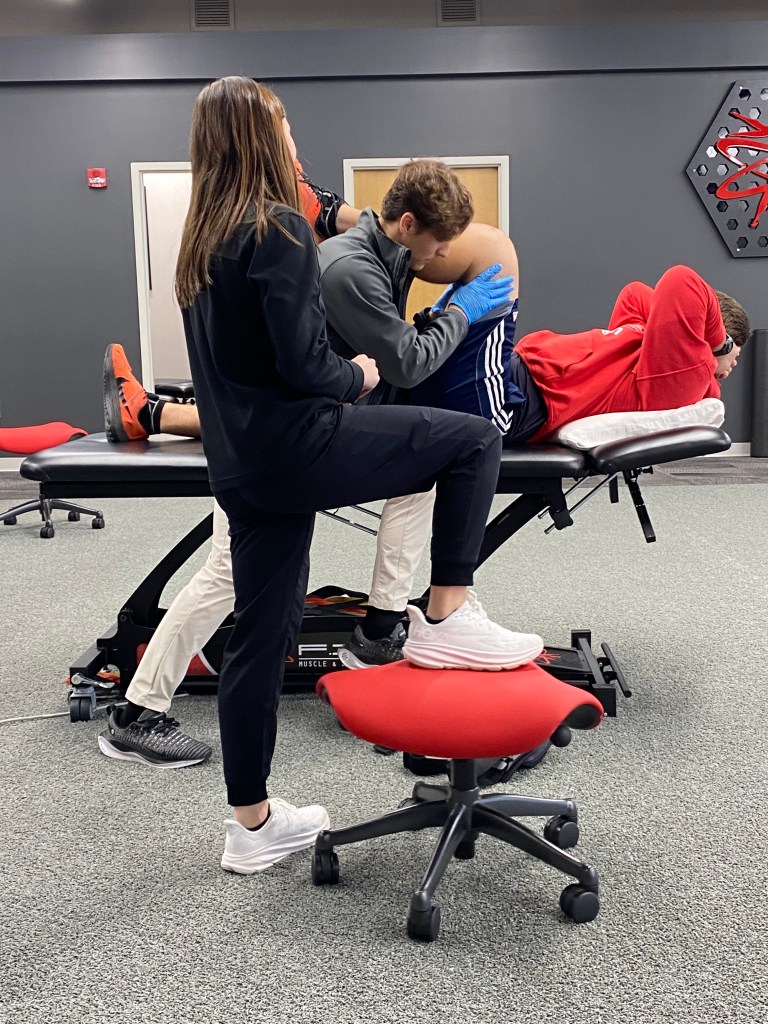
Navigating crutches with a 300-pound kid who can crush me with a hard lean was not how I envisioned wrapping up 2024. As I sat in the physical therapy office this week watching Jo grunt and sweat through his exercises, I began replaying a highlight reel of the Blomker Family 2024.
2024 began with our oldest son’s choice to not run his senior year of track for his new high school coach because “I will not run for a bully!” Flying him across the country to college races and skipping his HS graduation was not part of the plan for his senior year. Neither did we anticipate that same coach using passive-aggressive antics to sabotage Jo—a thrower who remained on the track team—all throughout the spring. That this coach “resigned” at the end of the track season after being caught bullying a female athlete felt bitter—too little too late.
When summer arrived, our daughter discovered that people we thought were looking out for her best interest on the track were dishonest and stabbed her in the back—a hard betrayal for a loyal, sensitive ten-year-old already struggling to find a place to belong.
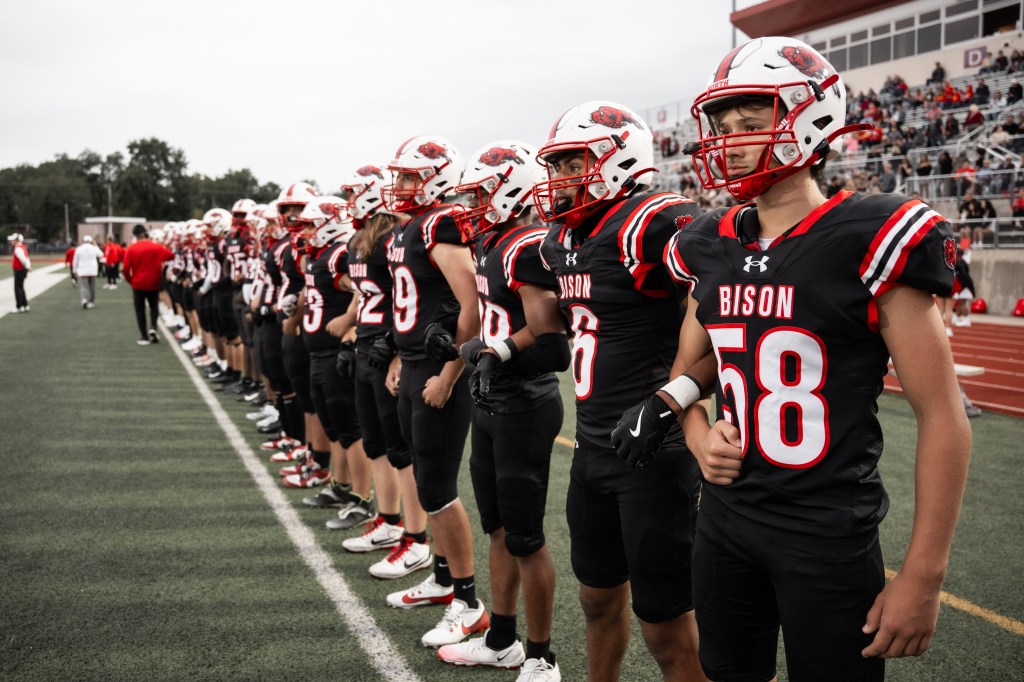
August of 2024 began with high hopes for a fun football season for our youngest boy, I-man, who played linebacker and tight end for his middle school football team. His first game on the field he played like an all-star—two touchdowns, a two-point conversion reception, and a ton of tackles on defense—including the last one which landed him in the ER with a broken collar bone.

2024 has felt like our own version of A Series of Unfortunate Events[1] where “most everything that happened to us was rife with misfortune and despair.” One bad thing stacked on top of another, as if we were specially chosen to not get the good things our hearts desired. God has felt more like an evil Count Olaf who delights in withholding good and creating evil “because it’s fun!” As my husband jokes, “I can count all my blessings on one hand—with all my fingers amputated.”
This year I’ve sat with client after client echoing similar themes in their own lives—loss, chronic illness, anxiety, trauma, oppression, church hurt, betrayal, divorce, overwhelm. Sometimes the weight of life’s suffering threatens to swallow me whole. On my cynical days I’ve felt tempted to quote the Man in Black from Princess Bride[2]: “Life is pain, Highness. Anyone who says differently is selling you something!” That terse sentence reveals the highlight reel often playing in my head—pain, suffering, trauma, loss—repeat.
Can you relate?
Over Thanksgiving Break I made space to slow down and reflect, and I’ve found myself asking this: what do the highlight reels playing in my head reveal about me?
When my cynical response to suffering after suffering is “Life is pain!” and “I guess I have to learn to be happy with the few crumbs God tosses my way,” what am I really saying? If all God gives me is pain and then tosses a few dry “crumbs” my way to keep me from falling into the pit of despair, what does that make him? Stingy? Uncaring? Punishing? If all I get is “crumbs” what does that make me? A loser? Not enough? Or just plain bad and undeserving, like an animal scrounging for scraps from the table where the golden children, the special ones, sit?
And what if I don’t even get crumbs? What am I then? Less than a dog at my Father’s table? An outcast? An untouchable? An unlovable reject?
Before you jump too quickly to truths like “God delights in giving good gifts to his children,” allow yourself to sit with the reality of how your particular sufferings make you feel. Do you feel blessed? Loved? Cherished and seen when life throws you a sucker punch to the gut?
I don’t.
My unholy response is silently judging God as an oppressive, distant, uncaring parent. The evidence for my judgment? My list of sufferings, crushed dreams, and hopes deferred.
On good days my best human response moves towards God with raw honesty: “Will the Lord reject forever? Will he never show his favor again? Has his unfailing love vanished forever? Has his promise failed for all time? Has God forgotten to be merciful? Has he in anger withheld his compassion?” (Psalm 77: 7-8).
And here is where we need to pause and sit for a bit—when life feels like a Series of Unfortunate Events, God invites you to slow down and speak your heart. But where do you begin?
- You begin by telling your story of woe—what happened to you? How have you suffered?
- Next, you identify how you feel about what you’ve experienced. (If you aren’t practiced in naming your feelings, a Feelings Wheel is a great tool you can find here.)
- Third, you begin an honest conversation with God about both what happened and how you feel about it. Jesus invites you to speak your feelings, questions and unholy judgments. The Psalms give language to help you speak your raw heart to God. (Psalm 142, 13, 40, 77 are good places to begin.)
- Don’t rush! Rushing usually comes from a place of control—trying to feel better faster, find solutions faster, “get to the other side” of pain faster. Yet God, in his grace, leads us into a slow and deeper healing that grows trust in Him.
[1] A reference to Netflix’s TV series based on the books of the same name. The books follow the turbulent lives of orphaned siblings Violet, Klaus, and Sunny Baudelaire. After their parents’ death in a fire, the children are placed in the custody of a murderous villain, Count Olaf, who attempts to steal their inheritance and causes numerous disasters with the help of his accomplices as the children attempt to flee.
[2] The Princess Bride is a 1987 American fantasy adventure comedy film directed and co-produced by Rob Reiner . Adapted by William Goldman from his 1973 novel, it tells the story of a swashbuckling farmhand named Westley, accompanied by companions befriended along the way, who must rescue his true love Princess Buttercup from the odious Prince Humperdinck. https://en.wikipedia.org/wiki/The_Princess_Bride_(film)

 Pursued