
Read Part 1.
Our youngest and only girl turned eleven this summer and with the onset of new hormones began disappearing to her room for hours. Her re-emergence was often accompanied by a scowl, and her brothers would try to joke her out of her bad mood: “Wow! You look like Cruella!” To which she’d respond with a flood of tears and flight back to her room, leaving puzzled brothers declaring “Mom, I was just kidding. She used to think that was funny. What is wrong with her!?”
I’d creep up the stairs to her dormer room, poke my head in, and she’d spout from her bed, “I don’t want to talk about it, Mom!”
“Well, I can see that you are upset and it’s good to talk about what you’re feeling.”
I’d feel the eye roll from underneath the quilt covers she’d pulled over her head, “Mom! You talk about emotions because you’re a counselor. I like to talk about fashion and art!” Her muffled voice would pitch and waver on the edge of tears. “And NO ONE likes what I like. NO ONE wants to play with me. I am ALL ALONE!”
In moments like these how does a mother engage the negative highlight reel playing in her daughter’s mind—I’m all alone! No one loves me! No one cares for my soul!?
It helps to remember that Jesus was a “man of sorrows, familiar with suffering,” and when those he loved wondered about their sorrows, he didn’t correct them but wept with them (John 11:35). His presence in pain showed who he truly is—a caring Father who though he allows grief, does not afflict his children from his heart (Lamentations 3:3).
So, what does a mother do? A mother might crawl under the covers and lay there in the dark until her daughter’s ready to speak, saying with her presence, I am with you and I’m here to stay.
One night as we lay under the covers in the dark, my daughter finally started to speak,
“I have so many struggles and I don’t like to talk about them! But M has lots of struggles and he talks about them.” She pauses on the brink of her story before plunging into the depths. “I don’t get to see my friends and I-man doesn’t like to play Legos with me anymore, and I feel so different from anyone else in the family. Like I don’t fit. I just feel so alone!” The dam breaks and she sobs into my shoulder.
I whisper, “I’m so glad you shared your struggles with me.” She tucks her red head under my chin, and as I stroke her hair, “I wonder . . . when you feel alone, where do you think Jesus is?”
She stills. Then, “I remember you talking about this before and I wrote something for myself.” She rolls out of bed and scrounges around in her desk for a crumpled notecard with these words scribbled in orange crayon:
E____, you are not alone. Jesus is with you.
“Whenever I feel alone and am crying on my bed, I look at these cards, and it helps me.”
This is how we hold onto hope in the dark—we expand our limited view to the unseen that’s always true.
When suffering narrows our story to a series of unfortunate events, we need help to see our story from a wider sweep with wiser eyes. Though we cannot always trace quick evidence of Jesus’ presence in our pain[1] the reality of Immanuel—God with us—remains.
When pain threatens to suffocate and steal our joy, we must choose to believe what we cannot see, “You are with me, my Father, my Friend. . . and your still waters run through any valley I could find” ( Still Waters–Leanna Crawford).
When life feels like a series of unfortunate events, and we do not know what to do–the only thing we can do is keep our eyes on Him. (2 Chronicles 20:12). In my own series of unfortunate events, I’ve been tracing his goodness in the midst of pain and thanking him for the more he’s always providing—grace, kindness, courage, and beauty—even in the dark.
Some of the more in the Blomker 2024 . . .




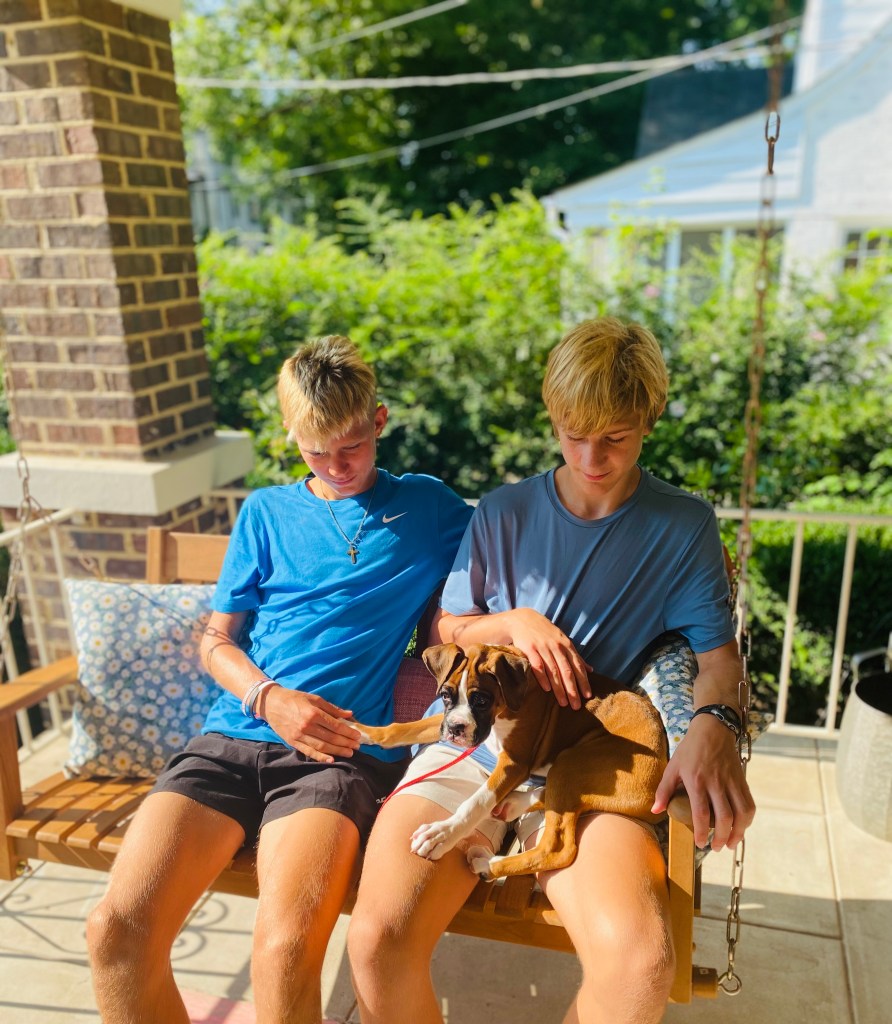












- A weekend in Wichita to watch Jo medal at State in shot and disc, in spite of everything with the coach.
- Graduating M from HS and transitioning well to University of Tulsa and a Scottish roommate with the best sense of humor and an easy-going personality.
- An anniversary trip to the Redwoods in CA.
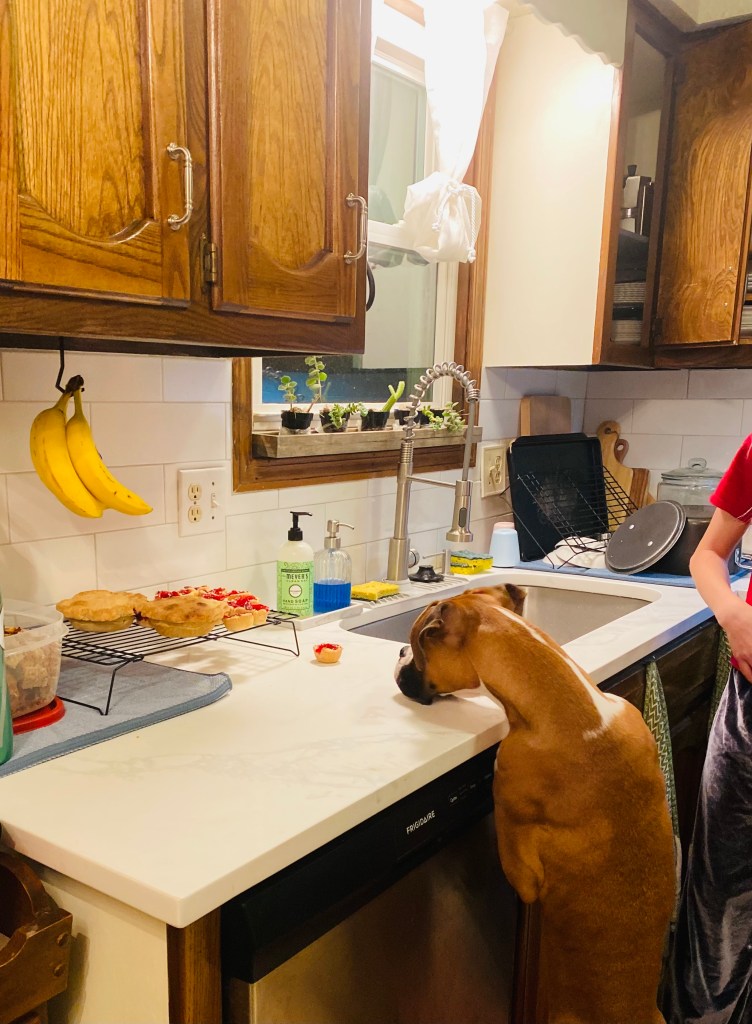
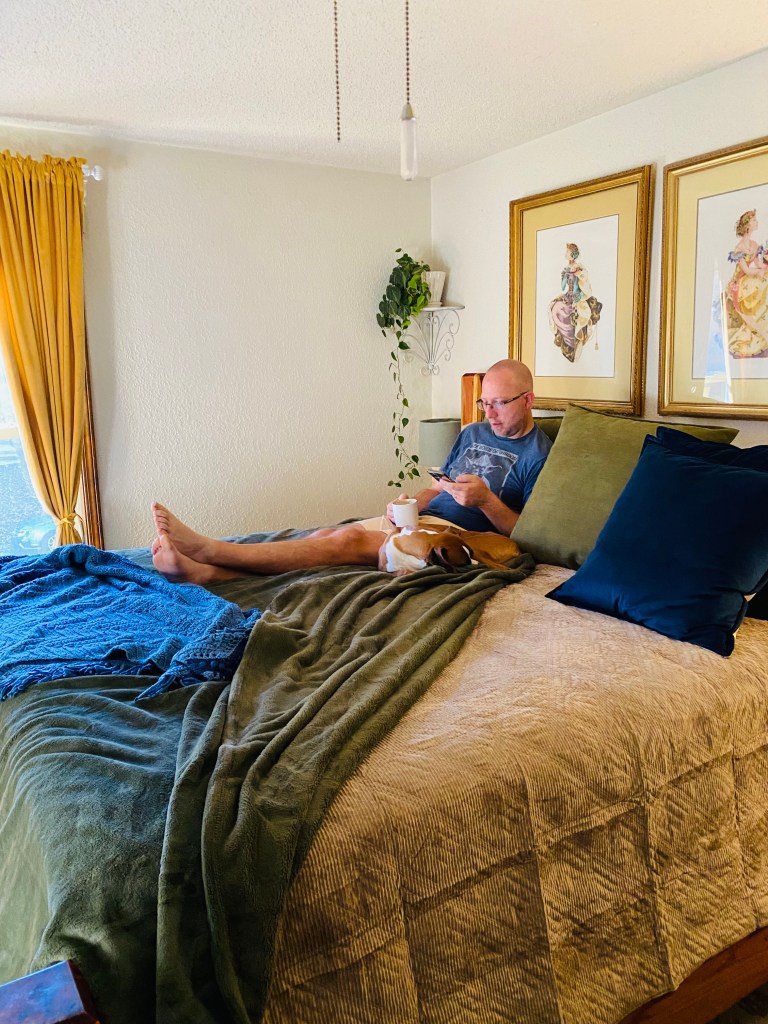
- A brand new boxer puppy, Molly, who is wild and wonderful.
- A visit to North Carolina to see dear friends, counselees, and colleagues too.
- E’s flaming hair, which, of course, made her the fastest on the track.
- Meeting Cory, a gifted journalist and kind human who wrote the story about Nolan, the 9-year-old-son of M’s former coach, who passed away last Dec. 7, and Micah’s own story of suffering and growth.
- Jo’s teammate, Elizear, bringing him home from school every day and the nurse tracking down an elevator key and a new set of crutches (which he broke, twice).
- I-man thriving and growing at Veritas online private school.
- Friends who pray with us and for us.
- Coffee dates and deep conversations.
Summary:
So, what do you do when your life feels like a series of unfortunate events? You keep your eyes on Jesus by
- Telling your story of woe—what happened to you? How have you suffered?
- Identifying how you feel about what you’ve experienced. (If you aren’t practiced in naming your feelings, a Feelings Wheel is a great tool you can find here.)
- Beginning an honest conversation with God about both what happened and how you feel about it. Jesus invites you to speak your feelings, questions and unholy judgments. The Psalms give language to help you speak your raw heart to God. (Psalm 142, 13, 40, 77 are good places to begin.)
- Expanding the negative highlight reel playing in your head to include the reality of Immanuel, God with you. How might you do this? A) You practice naming the ways he is present and working in and through your pain. B) You use your imagination to make the unseen, seen—Jesus’ tender face turned towards you, his arms carrying you, his voice saying, “I am with you always!”
- Thanking him for all the good he is doing. As Ann Voscamp says, “The way to keep your heart soft in a hard world is to keep giving thanks through the hard things.” (Ann Voscamp).
[1] McKelvey, David. Every Moment Holy, Vol. 1 “Death of Dream.”


 Pursued