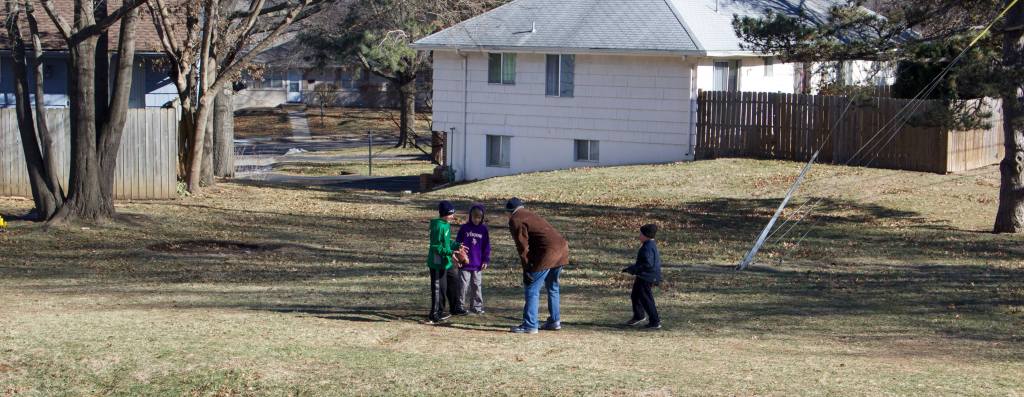
Visualize
Shunned: Avoided habitually and deliberately.[1]
“We turned our backs on him and looked the other way” –Isaiah 53:3
Read
The first time I met Sam, she stood on my doorstep with a grocery sack of garden-fresh tomatoes. “I seen your three little boys,” she said in the low, raspy voice of a long-time smoker. Leaning her way into my living room, she poked her dyed-blonde head around for a good look. The leathery brown skin round her neck crinkled in thick folds as she gazed across our green walls and eyed the thrift store furniture. “Me and my husband live over there,” she jerked her head in the general direction of the fourplex at the end of the street.”
“Oh, yes, the one with the garden on the side of the building!” I smiled, “You have so many beautiful plants and vegetables!”
“My husband does all that,” she said with a shrug, “We raised three boys and seeing your little blondies reminds me of them days. They eat so much at that age!” Sam looked down at the sack of veggies in her hands. “Here—these are for those boys of yours.” She thrust the sack into my arms and backed out the front door. “Thank you!” I called as she scurried down the sidewalk and crossed over to her side of the street.
I’d observed one of Sam’s three boys strutting down the alleyway behind our building—jeans halfway to the ground, head shaved close, chains around his neck, and chattering unintelligible sentences to the sky. He was high as a kite, that much was clear. The neighbors talked about Sam and her boys in whispers, “Lots of hard drugs . . . . Don’t want to get messed up in that.”
In a neighborhood where people lived on each other’s front steps, no one climbed Sam’s steps anymore.
One hot summer afternoon I walked outside to the neighbors clustered together in a clump outside my door whispering about a “body the cops found in the river. . . . Sam’s boy, the middle one. . . drug deal gone bad.” I glanced down the street to see Sam pacing up and down the sidewalk in front of her building in a sweatshirt and flip flops, alone. Why does no one go to her? Why does everyone look the other way?
I puzzled over these questions, trying to make sense of the distance between neighbors whose lives and sufferings mirrored each other in so many ways. Perhaps the broken reality playing out on Sam’s side of the street felt too raw, too close. Perhaps Sam’s suffering highlighted how little control we have over the suffering that visits our own doorsteps. Perhaps it just felt safer to look the other way.
Jesus, familiar with the sting of being shunned by friend and foe alike, never looked the other way when confronted with the suffering of others. Secure in his identity as God’s beloved son, Jesus crossed the proverbial street to sit with the shunned.
Meeting a Samaritan woman at a well in the middle of a desert day is one of the most memorable stories of Jesus crossing to the wrong side of the tracks. That Jesus chose to talk with an impure Samaritan[2] was shocking enough, but a woman? And not only that, an unmarried woman, and alone?[3]
I’ve wondered what drove the Samaritan woman to that well in the hottest part of the day. Who was she hiding from? What was she avoiding? The whispers behind her back? Silent shunning from other women? Suggestive looks from men who only wanted one thing? In a society where women survived on the good graces of fathers and husbands, what losses and abuses did she endure at the hands of the five men she’d lived with? The last one didn’t even value her enough to marry her and provide the security of his name.
Jesus, knowing everything she’d ever done, knowing everything ever done to her, did not turn away. As he sat by the well at midday, he pursued her even as she hid behind her water pitcher, “Can you give me a drink?” She, surprised he’d even speak to her, let alone ask for her help, responded, “Why would you ask me?” Without hesitation Jesus moved the conversation into deeper waters, exposing her longing to be filled with a love that never turned away. Then Jesus told her he knew what she was hiding—the bruises and soul-batterings from not one, not two, but five men. Feeling exposed, uncomfortable, she deflected with a theological argument. He moved with her deflection, only to bring her back to the truth that countered her identity as the impure woman, the shunned one: “I am the Messiah, and knowing everything about you, I want to be near you still.”
Jesus’ words dismantled her defenses. She dropped her water pitcher and opened her heart to receive the love of the first man who saw her for who she really was and still wanted to be near her, wanted the very heart of her. Overwhelmed with Jesus’ love for her, the Samaratian woman left her pitcher and crossed into the middle of the street to shamelessly declare the truth that set her free: “Jesus knows me. Really knows me! And still wants to be with me. He knows you and wants to be with you too!”
This is the free gift Jesus offers all of the shunned ones–He knows you and wants to be with you too.
Ponder:
What does Jesus turning towards you in love–knowing everything you have ever done, and everything ever done to you—do to your heart? Who are the shunned ones Jesus is calling you to turn towards today?
Pray:
Inhale: You turn towards me . . .
Exhale: Help me receive . . .
*You can read the rest of the posts in this series here.
[1] Merriam-Webster.com
[2] Jews viewed the Samaritans as impure and rebellious due to their choice to intermarry with pagan cultures around them and making political alliances with them.
[3] John 4:27. NLT. Biblegateway.com.


 Pursued