*You can find the previous post in this series here.
Note: The following contains details related to spousal abuse, suicidal threats, and self-harm, which could be triggering for some readers. Consider asking a safe person to read with you or simply skip this section and come back only when you feel ready.
As we walked through oppression at the hands of false shepherds, the hidden darkness in my family of origin began to bleed into the light of day. It’s important to preface this story of false shepherds in my family with the fact that my husband and I have no contact with my family, nor do we run in the same social circles. It’s been thirteen years since I’ve seen my parents. My only daughter has never met them, only my oldest son remembers them, and my parents live four miles down the road.
I grew up as a preacher’s kid, born and raised in Baptist, Bible, and Evangelical Free churches throughout the Midwest. For much of my elementary and middle school years I lived in a parsonage surrounded by corn fields and soybeans, playing baseball and riding bikes in the church parking lot, and hurdling the pews in the sanctuary like a track star while Dad worked in his office. I grew up listening to Dad preach on Sunday morning and night, memorized Scripture in AWANA, rode the bus to church camp in the summer, and acted in the children’s Christmas pageant. I even narrated the adult Christmas Cantata at age twelve with one of the local news anchors, a church attendee. Some of my fondest memories involve church potlucks, hymns, and Easter sun rise services. My mom homeschooled my siblings and I, and as a homeschooled PK in the 1980’s, church was my entire social life.
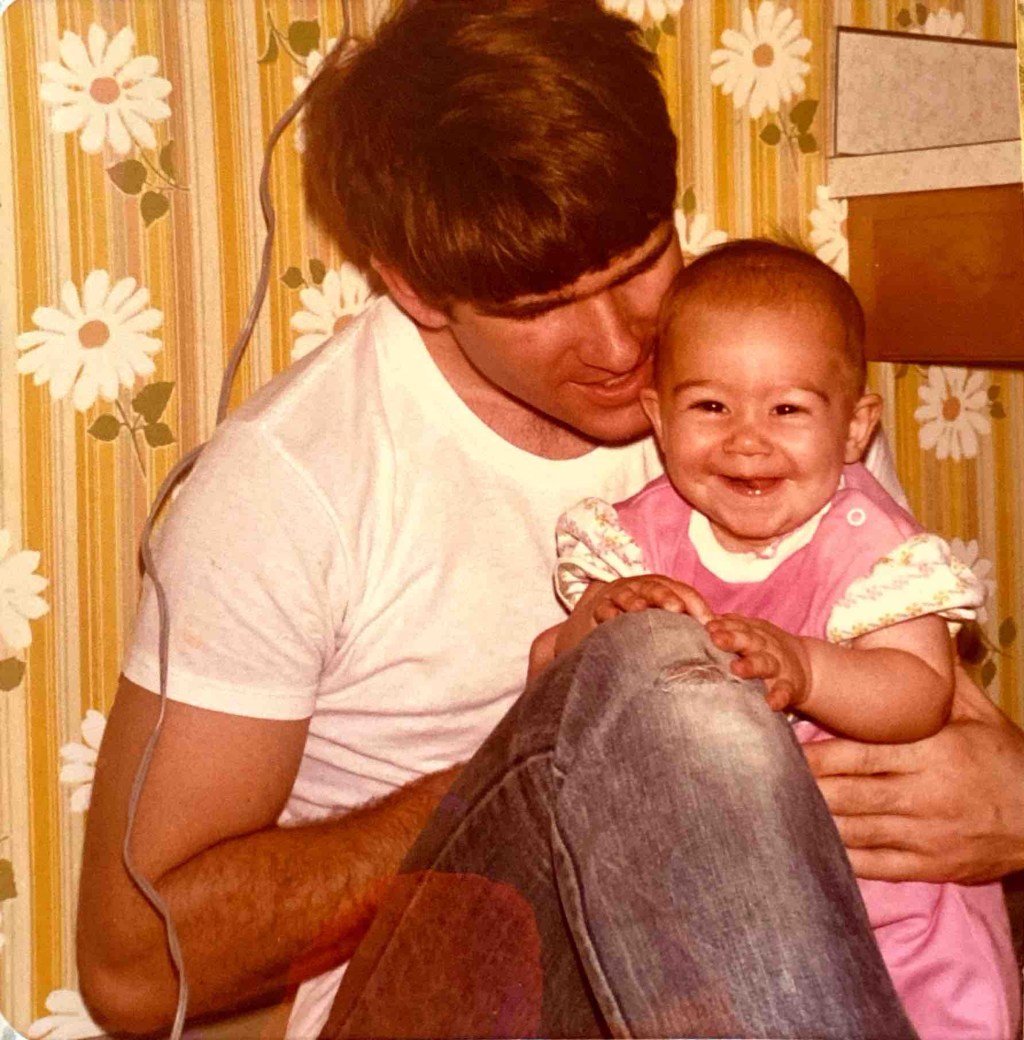
One of the most precious gifts my mother gave me is the story of how after I “asked Jesus into my heart,” at age five she drove me to the grocery store in our 70’s pea-green car while I yelled out the side window at the top of my lungs, “I love JESUS!” Mom laughed, “I knew then that Jesus was real to you.” I have no memory of that moment but am thankful for the gift of that story from my mother. Later in life, when I doubted my Christianity and sanity, the Lord used my mother’s testimony that Jesus was “real” to me then, to ground me and remind me that I belong to Jesus and always have.
My dad, unlike Mom, was largely absent from my life—always working. Even when he was home, he didn’t share much personally. At one point in my life, I realized I’d never heard Dad’s spiritual testimony, so I asked him about it. He just smiled, nodded, and walked away. My fondest memories of Dad are when he’d grab his guitar to strum Peter, Paul, and Mary’s song “The Marvelous Toy” while sitting in front of a crackling fireplace in the parsonage. Relaxed and real in those rare moments, dad’s tenor voice filled a room with warmth. I treasure those glimpses of his humanness.
Growing up I rarely saw my grandparents or extended family. For the most part, our family operated like a moated kingdom, with few visitors allowed through the drawbridge and into our inner courts. The serious fracturing in my family didn’t begin until my high school years—as my siblings and I grew up, left for college, and began making choices of our own, my mother began to unravel. For as long as I can remember, Mom struggled with intense fears of abandonment, relational paranoia, and emotional outbursts. She’d grown up with an alcoholic father and a mentally unstable mother. As a kid I remember picking up the green, corded phone in our downstairs kitchen to call a friend and hearing my grandma screaming at my mom, “I drug your dad’s drunken ass around for years!” As I grew older, Grandma attempted to triangulate me into their mother-daughter fights, so Mom sat me down and told me Grandma was a troubled soul. She’d been hospitalized in a mental institution for running after my grandfather with a butcher knife, and in a wild rage once asked my mom to help slit her wrists. Given the chaos of her upbringing, mom’s struggles with anger and fear made sense to me.
While my siblings and I remained home and under mom’s control, there was a measure of calm. Unknown to us, Dad, fearful of what others would think if they discovered the hidden issues in our family, worked hard to keep mom’s deeper struggles under wraps. Hiding, covering, and pretending was and still is my dad’s mode of relating. He was the nice pastor no one really knew because he held his cards close to his chest. Dad grew up in a pastor’s family with a father who was a famous athlete in his youth. According to my uncle (dad’s older brother), my grandfather was offered a photo spot on the Wheaties cereal box, but he turned it down because he thought being on the Wheaties box would make him look prideful. Maintaining an image of religious humility was a driving force in my grandfather’s life. My uncle, now an agnostic, shared how my grandfather asked him to kneel on the ground in a public restaurant and pray out loud. My uncle felt deeply ashamed and embarrassed at being coerced into such a showy religious act. He also remembers my dad being the kind of kid who tried to be the ‘good son’ by covering up his mistakes and sins to please my grandparents. Knowing something of my parents’ history has given me compassion for their suffering and wounds. We are far more alike than different.
As events at our Reformed church were unfolding, one of my sisters, married to a seminary student with pastoral aspirations, began calling me more frequently from where she lived across the country. With each conversation she appeared increasingly disoriented and was rushed to the hospital a couple times. In one instance she was told by the medical staff that had she not come to the hospital, she would have died. Yet the underlying cause for her physical distress remained ambiguous. I realize now that her body was telling what her lips could not: the unspoken story of spiritual and emotional abuse within her marriage.
As I talked with my sister, I slowly gathered a picture of the dynamics in her marriage: she was never allowed her opinion or preference “about anything at all,” and her husband drove recklessly in spite of her entries that he slow down and consider their young children. He berated her for hours over “small” things such as not double-checking her grocery receipts for “over-charges,” and demanding that she use their children’s WIC checks to buy cereal he preferred.[1] When she didn’t agree with his demands or pushed back, he used Scripture to shame her into submission, and even sat her down and read a list of her “sins.” Nearly every Sunday after church he expressed anger that the pastors in his church didn’t “praise” his degrees enough and complimented my sister’s creative abilities more than his preaching skills. Deeply concerned for my sister, I began researching for categories to understand her experience. When I stumbled across emotional and spiritual abuse, the patterns in my sister’s marriage suddenly made sense. Spiritual abuse is “when a spiritual leader—such as a pastor, elder, or [husband]—wields his position of spiritual authority in such a way that he manipulates, domineers, bullies, and intimidates those under him, as a means of accomplishing what he takes to be biblical and/or spiritual goals.”[2] Emotional abuse often overlaps with spiritual abuse and can be categorized as “mental, verbal, or psychological abuse.”[3] Darby Strickland, counselor and expert in marital abuse defines emotional abuse as “A pattern of behavior that promotes a destructive sense of fear, obligation, shame, or guilt in the victim. Emotionally oppressive people seek to dominate their spouses and they do so by employing a variety of tactics. They may neglect, frighten, isolate, belittle, exploit, play mind games with, lie to, blame, shame, or threaten their spouses. Their behavior is driven by a root of self-worship and entitlement that drives other forms of abuse.”[4]
In her book, Is it Abuse, Darby Strickland describes how the dynamics of coercive control can be present in almost every aspect of a spiritually and emotionally abusive relationship. Sex, money, Scripture, biblical principles like submission, and body language become weapons utilized to oppress and dominate. When my sister’s husband secured a pastoral internship at a prestigious church and began preaching on Sunday mornings, the pressure and coercion intensified to the point that my sister feared the obliteration of her will and voice. Scared for my sister and unsure what to do, I began reading everything I could find on spousal abuse and how to help.
As I shared with Mom how my sister’s marriage reflected the patterns of an abusive relationship, she flared into wild rages and pressured my dad to “do something.” Dad, fearful of how my sister’s imploding marriage would reflect on his reputation as a pastor and seminary professor, resisted getting involved and even defended my sister’s husband. But mom’s emotional outbursts and irrational thinking only escalated, so Dad eventually caved to the mounting pressure and flew out to help my sister and her husband “communicate and work things through.” After a week of playing mediator between my sister and her husband, Dad called me as I sat at my dining room table hosting friends for dinner. Coldly matter-of-fact, Dad dictated, “Rebecca, I’m not bringing your sister home, and your mom said she’d kill herself if I didn’t bring her back. So, I need you to go to your mom right now.” I hung up the phone, turned to our dinner party, and blurted out, “I’m sorry. I have to leave. My mom said she’s going to kill herself.”
I grabbed my keys off the hook on the wall, walked out our front door, and drove to my parents’ house to keep Mom safe. I found her on the phone in her bedroom and sat with her as she wept through the phone call with my sister. Later that night, with a sheepish grin on her face, Mom admitted to threatening suicide to pressure my dad to do what she wanted. Mom’s confession opened my eyes to hidden patterns of manipulation in my family. I wondered what other family secrets remained hidden, and felt uncomfortable with the growing suspicion that as the oldest daughter I was somehow being manipulated into mitigating the risk of those secrets being exposed.
Uncomfortable with the thought of being used like some kind of family pawn, I pressed Dad for some answers soon after he flew home from his visit with my sister. He put me off until mom’s emotional instability got exposed in her workplace and resulted in her forced “resignation.” At that low point, Dad finally confessed that Mom regularly engaged in self-harm, screamed, cursed, and threatened him. He said she’d been this way for years, and he’d always been afraid I would find out. As Dad divulged further details about the words and actions of the Mom I thought I knew, I began to shake violently, goose bumps popped all over my skin, I felt nauseous, and couldn’t get warm no matter what I tried. The shock that my pastor’s family, which I’d always believed was a “notch above the rest,” could be this messed up, flooded my body, mind, and heart.
As the madness with my mother and sister continued to escalate, my parents’ relationship with my other siblings imploded. I found myself at the center of it all, trying to navigate the storm of anger, suicide threats, and accusations. Desperate to hold my splintering family together, I spent hours trying to help everyone communicate and understand one another. In this role as the ‘family glue,’ I began catching Dad spreading lies between family members. When I confronted him on it, he calmly explained, “I had to lie to protect your mother.” That made no sense to me—protect her from what? The truth? What did that mean? So, I just let it go. After all, Dad was the pastor and seminary professor. What I missed then is Dad cared more about preserving his image as the spiritually superior pastor than anything else. He didn’t lie to protect my mother. He lied to protect himself. Just like the false shepherds in Ezekiel 34, Dad protected and preserved himself and left the rest of us to fend for ourselves. Rather than feed us encouragement and Christ amid the family crisis, he withheld information, hid, lied, manipulated, played the victim, and then stepped back and let Jon and I do all the soul care and practical help.
As one family crisis after another imploded around Jon and I, we began to understand no one in my family had any intention of getting real help to face our collective dysfunction. Mom said, “No counselor can tell me anything I don’t already know” and the little counseling we received was neither trauma-informed nor savvy to the dynamics of emotional and spiritual abuse. At one point Dad enlisted the aid of a Christian therapist who thought him a saint for having married a woman like my mom. This counselor said directly that if he were married to my mom, “I would probably separate from her.” He expressed great admiration for dad’s “sacrificial love.” Blind to dad’s deceit, the therapist bought his narrative of saintly martyr. After two years of being sucked into the family vortex, I finally sought out a counselor for help in navigating my family without losing my life and sanity. The counselor asked a question I’ve never forgotten: “How far can you follow a person’s delusion?” Having no idea, I said nothing. He continued, “Until you are asked to compromise who you are.”
When my family asked me to sweep our mess under the proverbial rug and affirm that “we are no different than other normal sinners” I couldn’t do it. To pretend we were ok would require me to live and enable a lie. So, I tried to straddle the fence between Christ’s kingdom of truth and light and my family kingdom of lies and darkness. For a time, I didn’t bring up any of our family “issues,” and appealed to them to “agree to disagree” on more than one serious matter. But avoiding the issues only intensified the relational tension. Slowly, I withdrew from my family role as the “glue.” I stopped planning family get-togethers and told my parents I would no longer play mediator between them and my siblings. I began putting boundaries around the time we spent with my parents and the context in which they saw our children. As I stepped out of the family fold, Dad tried various ways to draw me back in, from trying to drive a wedge between Jon and I, to using threats and pressure, to telling me that nothing I’d ever done for the family was “loving” and declaring me a non-Christian. Dad eventually followed his assessment of my Christianity with an email telling me “Goodbye.” He excommunicated me from the family simply because I refused to recant my assessment of the family dynamics as unhealthy or give up my life in service to them.
Slowly, one-by-one, my siblings followed suite. One sibling said that if anyone in the family committed suicide, it would be my fault. Another sibling threatened litigation if I shared my version of family issues publicly. Another sibling declared me “arrogant,” for not agreeing with her while screaming at me over the phone. The guilting and shaming tactics didn’t end there. My family slandered me to aunts, uncles, grandparents, and cousins. I was unfriended, blocked, and deleted from the family landscape. Only one sibling in the past fifteen years has dared propose we: “Put the past in the past . . . How about we just move forward?” In other words, “I’m uncomfortable with your choice to not enable the family lie. So, to eliminate my discomfort and protect my image, please join me in perpetuating the family fakery.”
Not one family member has ever asked for my side of the story. Not one.
To this day I remain dead to them.
Why do I share this snapshot of my family story? Why share the details of self-injury, suicide threats, and spiritual and emotional abuse? Does this exposure feel unkind, too much? I understand the discomfort—we Americans shy away from truth telling by withholding or minimizing it as airing dirty laundry. Telling the truth with grace is neither of those things. I share this snippet of my family story because there are other families hiding their pain and dysfunction. Perhaps people near these families have seen glimmers of the truth—a veiled suicidal threat, evidence of self-injury, or simply an observation that “something isn’t right” in that family. I’ve wondered at times how our family story might have been different if someone had pressed in and ferreted out the truth. Healing only comes when deeds done in darkness are brought to light. Christians are called to wisely discern what is pleasing to the Lord and “take no part in the unfruitful works of darkness but instead expose them” (Ephesians 5:11). The light exposes hidden ugliness and makes the invisible, visible. This painful exposure is neither vindictive nor unkind. Exposure of sin is a redeeming grace. So many Christians believe the lie that exposing sin or weakness amongst Christians—especially the clergy—somehow makes God look bad. The hubris behind that statement! Our sin does not make God look bad. Christians are saints, sufferers, and sinners. We should expect the clergy, who are also saints, sufferers, and sinners, to sin. To think God is somehow defamed by their sin is a self-protective lie. Christ-like humility welcomes exposure as a means of grace to bring healing and clarity. Christ’s power to redeem and restore is seen most brilliantly in our brokenness. He promises to make beauty from ashes, to rebuild the ruins of the past and clothe our shame with a garment of joy (Isaiah 61).
Sadly, because the American church has placed “The Pastor’s Family” on a pedestal of perfection, evidence to the contrary is either rationalized or discarded. Pastor’s kids who grow up and choose to move away from the hidden hypocrisy of their families are often treated as the “black sheep” and written off as mentally ill or rebellious, not only by their own family, but by fellow believers who watched them learn to walk in the nursery, memorize scripture in Sunday School, and get baptized as teens. I feel sorrow for my family because they remain in bondage, yet I accept that God has a good plan that I can’t see, and my responsibility is to live my own story in light of how Jesus rescued an outcast like me.
The pain of being orphaned and excommunicated from my family of origin reverberates into my adult life. Holidays, birthdays, graduations, and other special events slide by without a nod of acknowledgement from my parents. My husband and I navigate difficult seasons of life and parenting without family support. My kids are growing up without grandparents, cousins, aunts, or uncles. I wouldn’t wish this kind of rejection on anyone. Yet, I’m thankful for how the pain of rejection opened my eyes to the true allegiances of my heart. My loyalty to family rivaled my allegiance to Christ. Being excommunicated helped me see that my family’s acceptance and opinion of me mattered more than Christ’s. Though painful beyond words—and followed by a season of deep depression and soul-searching—getting kicked out of my family broke my imbalanced allegiance to them and opened my heart to a stronger allegiance to Christ. Being disowned by parents who should have loved me but could not, began God’s work of, as one of my counseling clients likes to say, “tenderizing.” But this process of tenderizing my heart to the point that I could truly receive and then extend Christ’s comfort to others would take years since change is slow and God never hurries.
Reflection
- What relationships have been affected by your experience of church trauma? Have you lost friends? Relatives? Both?
- What have you noticed about how you relate to others since that experience of relational fracturing?
- When you sense conflict in a relationship, how do you process it? Is it different now than it was before your experience of church harm?
- How has Christ been at work to “tenderize” your heart and draw you closer to him amid suffering experienced at the hands of spiritual leaders who should have loved you but did not?
*You can find other posts in this series here.
[1] The Special Supplemental Nutrition Program for Women, Infants, and Children (WIC) provides federal grants to states for supplemental foods, health care referrals, and nutrition education for low-income pregnant, breastfeeding, and non-breastfeeding postpartum women, and to infants and children up to age 5 who are found to be at nutritional risk.
[2] Kruger, Michael. “What is Spiritual Abuse.” Cannon Fodder. Feb. 8, 2021. https://www.michaeljkruger.com/what-is-spiritual-abuse/. Accessed June 26, 2023.
[3] Strickland, Darby. Is it Abuse? P&R Publishing, 2020. Page 178.
[4] Strickland, Darby. Is it Abuse? P&R Publishing, 2020. Page 178.